Manuacturer, Exporter, OEM Producer and supplier of Laboratory Instruments, such as Visible Spectrophotometers, UV/Vis Spectrophotometers, Semi Micro Laboratory Balances, Analytical Lab Balances, Precision Balances, Laboratory Scales, Pharmacy Balances, Chemical Balances, pH/ORP/COD/DO/Turbidity/Conductivity Meters, Mini Magnetic Stirrers, Gas Chromatagraph, Shaking Incubators, Biological Microscopes
2016年1月12日星期二
Halogen Moisture Balance Moisture Analyzer for Grain Seed Food Paper
Features
1. LCD Display
2. Touch-tone chain plate makes the operation easier.
3. The high precision heat insulation sensor makes temperature for data acquisition reliable.
4. The use of halogen lamp for heating, makes test time shorter.
5. In the process of test, the dry state can be directly confirmed to speculate the finish time.
6. It is equipped with automatic tare function, it can measure immediately and continuously.
7. RS232 interface, the products can be directly connected to computer and printers.
8. Applications: chemical raw materials, grain, mineral, biological product, food, pharmaceutical raw materials, paper, textile raw materials and etc.
9. Two Weighing Pans supplied as standard.
Technical Parameters
Weighing Capacity: 10g
Readability: 10mg
Repeatability: 0.5%
Heating Temperature Range: 50-180 Celsius Degree
Heat Time: 1-99min, 1 min interval
YK Scientific Instrument is a professional supplier and exporter of Moisture Balance.
For more information, please feel free to contact us via email:
sales@yk-instrument.com
2015年12月9日星期三
Large LCD Graphical Display Laboratory Dual Beam Spectrophotometers UV Visible
UV1900 series are double beam UV/VIS Spectrophotometers with a scanning function, wider range of spectrum and the highest quality components. Due to its built-in micro-computer system, plus excellent optical and electric circuit system, rational mechanical structure and a large LCD display screen, the instrument is effective and useful for lab analysis in industries.
UV1900 series UV/VIS Spectrophotometer is very easy to learn and the user-menu on the large LCD screen allows every item to be chosen and accepted corresponding to each operational step.
Being excellent practical UV/VIS Spectrophotometers, UV1900 series provide fast and simple analytical methods to be widely used in organic, inorganic, petroleum, pharmacy, environment, bio-chemistry, medicine, food and other national economy departments for QC and QA.
Features
1.High performance holographic blazing grating, 1200 line/mm, real double beam.
2.It is convenient to replace lamps due to the open type light source compartment.
3.Professional software based on Windows makes the model has versatile functions: Photometry, Quantitative, Wavelength Scan, Multi-wavelength; Kinetics, Spectrum Analysis like Peaks and Valleys, Peak Area, Addition, Subtraction, Multiplication, Division, Derivative(order 1-4), Zoom, Smoothing.
4.Stray light: Equal or less than 0.02%T.
5.Noise: +/-0.0003A.
6. 24 bits high speed, high precision transformation between A and D.
7.New ARM System, built-in dual languages(Chinese & English)operating system.
8.It is able to store huge amounts of analytical datas, which also can be transfered to PC via the USB port.
For more information please feel free to contact us via: sales@yk-instrument.com
YK Scientific Instrument is a professional manufacturer and exporter of Dual Beam Spectrophotometers
UV1900 series UV/VIS Spectrophotometer is very easy to learn and the user-menu on the large LCD screen allows every item to be chosen and accepted corresponding to each operational step.
Being excellent practical UV/VIS Spectrophotometers, UV1900 series provide fast and simple analytical methods to be widely used in organic, inorganic, petroleum, pharmacy, environment, bio-chemistry, medicine, food and other national economy departments for QC and QA.
Features
1.High performance holographic blazing grating, 1200 line/mm, real double beam.
2.It is convenient to replace lamps due to the open type light source compartment.
3.Professional software based on Windows makes the model has versatile functions: Photometry, Quantitative, Wavelength Scan, Multi-wavelength; Kinetics, Spectrum Analysis like Peaks and Valleys, Peak Area, Addition, Subtraction, Multiplication, Division, Derivative(order 1-4), Zoom, Smoothing.
4.Stray light: Equal or less than 0.02%T.
5.Noise: +/-0.0003A.
6. 24 bits high speed, high precision transformation between A and D.
7.New ARM System, built-in dual languages(Chinese & English)operating system.
8.It is able to store huge amounts of analytical datas, which also can be transfered to PC via the USB port.
For more information please feel free to contact us via: sales@yk-instrument.com
YK Scientific Instrument is a professional manufacturer and exporter of Dual Beam Spectrophotometers
2015年10月29日星期四
Affordable UV Visible Spectrophotometer with Large Color Screen & Excellent RAM
Features
1. 7 Inch Color Screen
Users can do the measurement without connecting to PC with the large screen which can display the scanning curve and graph.
2.Measured values can be stored to Memory Stick
3.Measured result can be saved to Excel, txt or picture format (*csv, *qua, *tet, *bmp), which ensures users can edit the test report on PC.
4.Top-of-Line hardware
32 bits Cortex_M3 processor, clock speed can reach 120M.
5.Data Store Function
The RAM has the capability of saving 5000 groups of data and 200 curves which can be recalled anytime.
6.Excellent Auto-calibrated CT Optical System
7.Exported Long Service Life Lamps
8.Super PC Software
The software functions include (1)Kinetics (2)Quantitative (3)Wavelength Scan (4)Multi Wavelength Test (5)DNA/Protein Test.
And the software can be remotely updated.
To learn more, please contact us by email to sales@yk-instrument.com
2015年10月27日星期二
Internally Calibrated Semi-micro Balance 0-60g/60g-200g Capacity
1. Rugged Weigh Cell for Reliable Results.
High resolution, overload protected weigh cell ensure durable and reliable performance.
2. Practical and Sturdy Draft Shield.
The sturdy draft shield will stand up to daily use, even "abuse" by inexperienced operators.
3. Fluorescence Digital Display.
4. Metal House which makes the balance more durable.
5. Full Range Tare.
6. Easy to Use Keyboard Arrangement and Menu, makes training and operation simple, reducing mistake.
7. Multiple Weighing Units: Allows flexibility of weighing across many disciplines.
8. Stainless Steel Pan.
9. Parts Counting Function: Allows accurate counting of components and small parts.
10. 3 door removable draftshield glass chamber (185 x 155 x 210mm).
Technical Parameters
1. Weighing range: 0-60g/60g-200g
2. Readability: 0.01mg/0.1mg
3. Calibration: Internal
4. Pan diameter: 90mm
For more information, please contact us via email: sales@yk-instrument.com
YK Scientific Instrument Co.,Ltd
2015年9月4日星期五
How to select UV Visible Spectrophotometer
A UV Visible Spectrophotometer is the instrument which is used to measure the intensity of light before and after passing through a sample - the ratio of one to the other is called transmittance and is expressed as a percentage. From transmittance, absorbance can be calculated.
Laboratories seeking a new UV/Vis spectrophotometer face no shortage of
choices, from the simplest single-wavelength measurements to high-performance, multi-spectrum analyses.
This guide will help you by discussing the important considerations for your
next UV/Vis spectrophotometer.
Application Considerations
UV/Vis spectrophotometry can be used for a wide range of applications, including biological analyses, clinical diagnostics, food, environmental, pharmaceuticals and materials analysis. The first thing you will need to consider is the application(s) for your UV/Vis spectrophotometer. Applications considerations have several components such as:
- Types of samples to be analyzed – this will enable you to choose the absorbance range.
- Volume(s) of samples to be analyzed – will you need a standard spectrophotometer or a microspectrophotometer?
- Current laboratory applications – this will help determine features, detection range and characteristics you require.
- Future applications – will you have future applications that will require a broader range?
Considerations for Instrument Components
The different components of a UV/Vis spectrophotometer contribute to the overall performance of the instrument. Any UV/Vis spectrophotometer will have the following different parts:
- Light source – provides radiation of appropriate wavelength.
- Sample compartment – the area where sample is introduced into the light beam.
- Monochromator – produces a beam of monochromatic light; in the conventional UV/Vis configuration, it consists of an entrance slit, collimating device, dispersing device, focusing lens or mirror, and an exit slit.
- Detector – detects and measures the intensity of radiation.
- Signal handling and measuring system – processes data and controls the instrument.
Light Source
The light source should be stable during the measurement period. That is, the intensity of emitted radiation should not fluctuate, and there should be adequate intensity over as large a wavelength region as possible. The ideal light source would yield a constant intensity over all wavelengths with low noise and long-term stability.
Buying Guide Tip: Some UV/Vis instruments can be equipped with a variety of sample holders to suit changing needs, such as a change in sample volume and sample type (liquid, solid).
Many UV/Vis spectrophotometers use both deuterium and tungsten-halogen lamps to cover the entire UV (deuterium lamp) and visible (tungsten-halogen lamp) spectrum. Either a source selector is used to switch between the lamps as appropriate, or the light from the two sources is mixed to yield a single broadband source. Xenon flash lamps have become more common because it covers the entire UV and visible range, has very long lifetime, does not require warm-up time, and does not raise the temperature of the sample compartment. Light-emitting diode (LED) is used in some instruments.
Sample Format
Most samples analyzed by UV/Vis are liquid. Traditional sample formats take sample cells, cuvettes, sippers (for automated sampling), and microtiter plates, as well as combinations of these. Some instruments feature fiber optic probes for measuring samples outside the UV-Vis spectrophotometer’s sample compartment. It eliminates the need for filling a sample cell, which is especially useful for quantitative analysis in quality control labs, where large numbers of samples need to be analyzed quickly.
Monochromator
The ideal monochromator should produce monochromatic light. In practice, however, the output is always a band, optimally symmetrical in shape. The dispersing device in monochromators can be a prism or diffraction grating. Most modern spectrophotometers contain holographic gratings instead of prisms.
Detector
Ideally, the detector should give a linear response over a wide range, with low noise and high sensitivity. Photomultplier tubes (PMT) and photodiode are single channel detectors, and the most commonly used in the instruments currently out in the market. Photodiode is usually found in low-end instruments, while PMTs are used in higher-end instruments (research grade). Photodiode array (PDA) and charge-coupled device (CCD) are multi-channel detectors. They allow for fast acquisition of the entire spectrum, and since they have less moving parts, are more robust. However, they are not as sensitive as PMTs.
Considerations for Optical Configurations/Optical Design
There are several optical configurations for the UV/Vis spectrophotometers you will find in the market. The single beam configuration was the earliest design and is still in common use, especially among low-end instruments. Double beam and dual beam spectrophotometers measure the ratio of light intensities and, therefore, are not as sensitive to fluctuations in the light source or detector. Split beam resembles the dual-beam spectrophotometer but uses a beam splitterinstead of a chopper, uses two separate but identical detectors.
Single beam, double beam and split beam are conventional UV/Vis spectrophotometers. In conventional systems, polychromatic light from the source is focused on the entrance slit of a monochromator, which selectively transmits a narrow band of light. This light then passes through the sample area to the detector. In multi-channel UV/Vis spectrophotometer, such as those that use photodiode array (PDA) and charge couple device (CCD) detectors, polychromatic light from a source passes through the sample area and is focused on the entrance slit of the polychromator, which disperses the light onto a diode array where each diode measures a narrow band of the spectrum. Figure 7 illustrates the difference in which the instrument components are set-up in conventional (single beam configuration is shown) and multi-channel (PDA system is shown) systems.
![]() |
| Single Beam UV Visible Spectrophotometer |
![]() |
| Split Beam UV/Vis Spectrophotometer |
![]() |
| Double Beam UV Visible Spectrophotometer with Touch Screen |
![]() |
| Large Screen Spectrophotometer Double Beam |
Considerations for Performance Criteria
here are many aspects to consider when buying a new UV/Vis spectrophotometer, but the three main criteria are wavelength accuracy, wavelength reproducibility and noise levels. The list below describes in detail important considerations for performance criteria.
Wavelength Accuracy
The deviation of the wavelength reading at an absorption band from the known wavelength of the band. The wavelength deviation can cause errors in the qualitative and quantitative results of the UV/Vis measurement.
Wavelength Reproducibility
The instrument’s reproducibility when making repeated readings of the same wavelength.
Noise
Noises in UV/Vis spectrophotometers originate mainly from the light source and electronic components. Noise affects the accuracy at both low and high ends of the absorbance scale: photon noise from the light source affects the accuracy of the measurements at low absorbance, electronic noise from electronic components affects the accuracy of the measurements at high absorbance. High noise level will reduce the limit of detection and reduces the instrument’s sensitivity.
Photometric Range (Working Absorbance Range)
For some applications, specifically those that have strongly absorbing species, it is important to consider photometric range. A spectrophotometer that can detect transmission of 10% has a photometric range of 1A, 1% is 2A, 0.1% is 3A, and so on. A photometric range of 3.5A to 4A means it can handle samples that absorb as much 99.99% of incident light.
Linear Dynamic Range
The concentration range over which absorbance and concentration remain directly proportional to each other. A wide linear dynamic range permits the analysis of a wide range of sample concentrations (optical densities), and reduces sample preparation (dilution) requirements.
Photometric (Absorbance) Accuracy
Photometric accuracy is defined as how accurately an instrument measures absorbance and is determined by the difference between the measured absorbance and the established standard value.
Photometric Reproducibility
The precision with which the UV/Vis instrument can make repeated measurement. It indicates how well the measured absorbance value can be reproduced.
Photometric Stability
Variations in lamp intensity and electronic outputs between the measurements of the incident radiation (Io) and transmitted radiation (I) result in instrument drifts. These changes can lead to error in the value of the measurements, especially over a long period of time. Photometric stability is the ability of the instrument to maintain a steady state over time so that the effect of the drift on the accuracy of the measurements is insignificant.
Stray Light
This is the unwanted radiation or wavelength of light other than the desired wavelength that reaches the detector. Stray light causes a decrease in absorbance and reduces the linearity range of the instrument. High absorbance measurements are more severely impacted by stray light.
Spectral Bandwidth, Resolution
Spectral bandwidth and resolution are related: the smaller the spectral bandwidth, the finer the resolution. In general, poor resolution leads to a decrease in extinction coefficient across the spectrum and therefore inaccurate quantitation. The sensitivity of the measurement is also compromised. Most UV/Vis spectrophotometers in the market today provide adequate resolution for the most common applications. If your application requires detailed spectral information, you need an instrument with very small bandwidth (better resolution).
Baseline Flatness
For UV/Vis spectrophotometers that have dual light sources (a deuterium lamp for the UV range and a tungsten lamp for the visible range), the intensity of the radiation coming from the light sources is not constant over the whole UV-Visible range. The response of the detector also varies over the spectral range. A flat baseline demonstrates the ability of the instrument to normalize the output of the lamp and detector responses.
Wavelength Range
Range in which the instrument is capable of measuring. UV/Vis instruments typically have 190–1100 nm wavelength range.
Useful Questions
In order to make the most out of your purchasing power you should ask yourself the following questions before speaking to a manufacturer:
1. What is your budget?
2. How will be using the instrument? Does it need to have a simple operation?
3. Is speed of analysis important to you? What is the scan rate/speed?
4. Do you need specific accessories for your applications? Are you analyzing extreme volumes (large or small)?
5. Future-proofing: How many samples will you be running per annum?
6. What service package do you require?
By asking yourself these questions, you equip yourself with the knowledge and understanding to enable you to make the right purchase for you and your experiments.
2015年8月26日星期三
Easy Operation Teaching Visible Spectrophotometer
![]() |
| USB RS232 Port |
![]() |
| Cuvette Holder |
Features
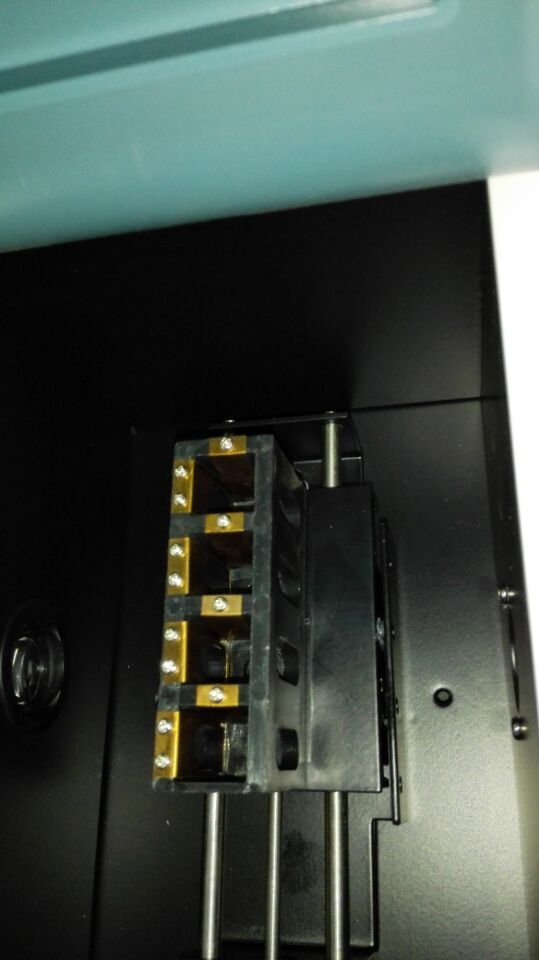
1. Automatically set and calibrate the wavelength.2. USB ports for programming updates and other accessory connection.3. Absorbance, %T and concentration modes.4. The RAM has the capability of saving 200 groups of measured data which can be recalled any time.5. Users can build their own standard curve and save it within the RAM. The curves can be reloaded at any time. Up to 100 curves can be stored.6. Optional software based on windows for VIS 723N, can expand the applications to Standard Curve and Kinetics through the USB port.7. Imported Fiber Converter, which guarantees the high sensibility.8. Advanced Microcontroller. 32 bits ARM 11, the frequency can reach 533MHZ, which ensures the instrument’s stability.9. Sealed monochromator and all the optical mirror surface is coated with Silicon Dioxide, which protect the optical components from the environment.10. The instrument has the ability to test Absorbance, Transmittance and concentration at selected wavelength.11. Optional carousel 8 positions cell holder.
Feel Free to Contact for more Details.
Email: sales@yk-instrument.com
2015年7月14日星期二
Make routine lab work easy with the Intuitive TouchScreen Analytical Balance
A number of features make your workflow much more efficient, such as direct data transfer, ergonomic style and , above all, the entirely new touchscreen user interface with built-in application programs.
Intuitive TouchScreen User Interface
The self-explanatory icons and plain text prompts on the large touch screen show you all the information you need to know for the procedure.
Easy and Convenient Data Transfer
After connecting the USB port to a computer, just open the Windows application you need, it delivers data in your choice of format, either text or numbers, enabling effortless and accurate spreadsheet calculations.
Increase Efficiency with Software Application Programs
The software enables you to customize the model to a variety of weight measurement tasks. Take specific gravity. With the built in Density application, you can effortlessly determine the density of solids liquids.
For more information, please feel free contact: sales@yk-instrument.com
Copyright @ YK Scientific Instrument Co.,Ltd
2015年6月12日星期五
Advanced Laboratory Instrument Double Beam Scanning UV Visible Spectrometer with Touch Screen
Product Description
The super series UV Visible Spectrophotometer with a scanning function, wider range of spectrum
and the highest quality components. Due to the built-in microcomputer system, plus advanced
optical and electric circuit system, rational mechanical structure, strict demanding on technical
process, and friendly intuitive graphical software UV-SUPER2.0, the New SUPER series is effective
and useful for lab analysis in industries.
Features
1. Applied with 8 inch high resolution color LCD touch screen, friendly and easily to operate.
2. Excellent performance and outstanding stability
1) Fully enclosed monochromator and all optical mirror surfaces are coated with SiO2 protective film,
to protect the optical parts from the effects of the gas and the environment.
2) Philips Tungsten lamp and Hamamatsu Deuterium lamp.
3) Adopt advanced guide screw structure, which ensures the wavelength accuracy and repeatability.
4) Advanced 32 bit microcontroller (NXP ds-lpc3250), which frequency can reach 533 MHz.
5) 64 bit high performance AD from BB Company, USA.
6) 32M storage capacity, supports Mouse operation and large capacity SD card.
7) Low Stray Light. The stray light is only 0.05%T which enables the users to decrease the analysis
Relative Error greatly.
3. Easy to maintain
1) Unique socket design for tungsten lamp and deuterium lamp, free of optical debugging, equipment
debugging and maintenance after replacing lamps. So there is no need for professional adjustment while
replacing a new one. Therefore users no longer need to hire professionals to change or adjust lamps which
greatly improves reliability and cuts down on the maintenance expenses.
2) To avoid cross effect, Optical path and circuit are separated.
Copyright @ YK Scientific Instrument Co.,Ltd
订阅:
博文 (Atom)